Choosing the wrong pavers for a Florida driveway or pool deck is an expensive mistake. The combination of year-round UV exposure, summer storms, high humidity, and the constant wet-dry cycle around pools eliminates a lot of options that work fine in cooler climates. What holds up in New England won’t necessarily hold up in Broward County.
This guide covers the most common paver materials used in South Florida, what each one is actually like to live with, and how to match the material to the application — whether you’re resurfacing a driveway, adding a pool surround, or building out a full outdoor living area.
Why Paver Material Matters More in South Florida
Florida’s climate is not forgiving. A few things work against outdoor surfaces here that homeowners in other states rarely think about:
Sustained heat and UV. Surface temperatures on dark pavers in direct summer sun can exceed 140°F. Materials that absorb heat become uncomfortable to walk on barefoot and can expand enough to crack or pop over time.
Freeze-thaw isn’t the problem here — wet-dry cycling is. Most paver ratings emphasize freeze-thaw resistance, which matters in northern climates. In South Florida, the issue is the opposite: repeated soaking from afternoon storms followed by rapid drying. This matters most for porous materials and for joint sand stability.
Pool chemistry. Pavers around pools are exposed to chlorine splash, saltwater (for salt pools), and the constant wet edge around pool decks. Some materials stain, fade, or deteriorate faster under these conditions.
Tree roots and sandy soil. Broward County’s underlying soil is primarily sand over limestone. Sandy soils drain well but offer less structural resistance to lateral movement. If you have large trees nearby, root intrusion under a paver base is a real long-term concern — one that affects material choice and base depth.
The Main Paver Options for Florida
1. Travertine
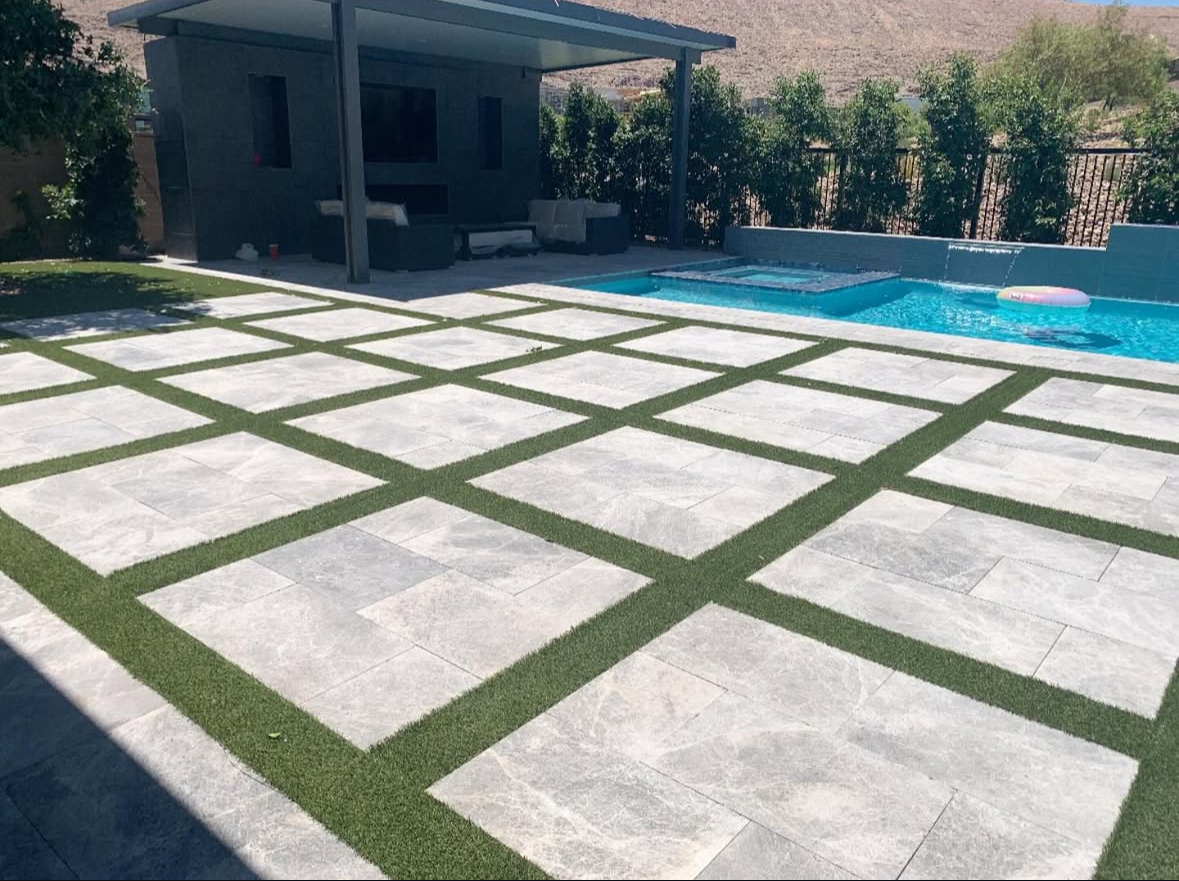
Travertine is the most popular choice for pool decks in South Florida, and it earns that position. It’s a natural limestone that forms in hot springs, which means it was created under heat — it handles Florida summers without absorbing or retaining heat the way concrete and some manufactured pavers do.
Why it works well here:
- Naturally cool to the touch even in direct sun (thermal properties inherent to the stone)
- Slip-resistant surface texture — the natural pitting provides grip when wet, which matters around pools
- Aged appearance that looks better over time rather than showing wear as damage
- Available in large formats (16×24, 18×18, 24×24) that reduce joint lines and create a clean look
Trade-offs:
- Travertine is porous. Without sealing, it will absorb oils (from grills, sunscreen, cars) and can stain. Seal it every 2–3 years.
- The filled-and-honed varieties have a smoother surface that looks more refined but loses some of the natural slip resistance
- Higher material cost than concrete pavers
Best applications: Pool decks, covered patios, walkways. Also works for driveways with proper base depth.
2. Concrete Pavers
Concrete pavers are the workhorse of the paver industry and account for a large share of driveway installations in Broward County. They’re manufactured under high pressure and are extremely dense — more durable than poured concrete slabs because they flex with ground movement rather than cracking.
Why they work:
- High compressive strength — rated for driveways and can handle vehicle weight without issue
- Wide range of profiles and colors, including textured options that mimic brick or stone
- Lower material cost than natural stone
- Readily available, easy to replace individual units if damaged
Trade-offs:
- Darker colors absorb significant heat. A charcoal or dark gray concrete paver in direct sun becomes uncomfortably hot for bare feet
- Color can fade over years, particularly in full-sun applications in South Florida’s UV intensity
- Some homeowners find the manufactured look less appealing than natural stone
Best applications: Driveways, parking pads, areas with heavy foot traffic or vehicle access. Not the first choice for pool decks if heat is a concern.
3. Brick Pavers
Traditional clay brick pavers have been used in Florida for decades. In older Pompano Beach and Fort Lauderdale neighborhoods, brick paver driveways and walkways were standard. They hold up well and age gracefully.
Why they work:
- Authentic look that complements craftsman, colonial, and traditional home styles
- Clay is naturally fired at high temperatures — UV doesn’t cause fading the way it does with manufactured concrete
- Durable and repairable: individual bricks can be removed and reset
Trade-offs:
- More expensive than concrete pavers
- Slightly more porous than high-density concrete, which can invite moss or algae in shaded areas
- Fewer modern profile options if you’re matching a contemporary home design
Best applications: Driveways, walkways, pool decks in traditional or Mediterranean-style homes. Less common for modern or minimalist designs.
4. Porcelain Pavers
Porcelain pavers are the newest category to gain traction in South Florida residential work. They’re manufactured similarly to large-format indoor tile but engineered for outdoor use — non-porous, UV stable, and available in large slab formats that create a clean, contemporary look.
Why they work:
- Non-porous: won’t absorb pool chemicals, oils, or staining agents. Low maintenance.
- UV stable: color and surface texture won’t fade under South Florida sun
- Large format options (24×48, 32×32) with minimal grout lines create a sleek, modern appearance
- Lighter colors stay cooler underfoot than concrete alternatives
Trade-offs:
- Higher material and installation cost — requires a more precise base and skilled installation
- Harder to find experienced installers; improper base preparation causes hollow spots and cracking
- Less forgiving of ground movement — smaller cracks in the base transfer to the surface more readily than with concrete pavers
Best applications: Modern home designs, pool surrounds for high-end outdoor spaces, covered patios. Growing in popularity for full driveway replacements in contemporary homes.
Comparing the Options Side by Side
| Material | Heat Resistance | Pool Use | Driveway | Maintenance | Cost (Installed) |
|---|---|---|---|---|---|
| Travertine | Excellent | Excellent | Good | Seal every 2–3 yrs | $$–$$$ |
| Concrete Pavers | Moderate (dark absorbs heat) | Good | Excellent | Low | $ |
| Brick | Good | Good | Good | Low–Moderate | $$ |
| Porcelain | Good (light colors) | Excellent | Good | Very low | $$$–$$$$ |
Cost ranges are general estimates for South Florida installation including base prep, materials, and labor. Actual pricing depends on square footage, existing surface removal, base depth, and pattern complexity.
Driveway-Specific Considerations
Driveways in Florida face a different set of demands than pool decks. Vehicle weight, tire scuffing from turning movements, and oil or fluid staining are all factors that pool decks don’t contend with.
For driveways specifically:
Base depth matters more. A properly installed paver driveway requires a minimum 6-inch compacted aggregate base — some applications need 8 inches depending on soil conditions and vehicle weight. Shortcuts on base preparation are the most common cause of paver driveway failures.
Pattern affects structural performance. Herringbone patterns at 45° or 90° distribute load better across a driveway than running bond or stacked patterns. For high-traffic driveways, this matters.
Color and finish for heat. If your driveway is in direct afternoon sun and you want to walk on it barefoot or you have children playing near it, lighter colored pavers or travertine are worth the extra cost. A dark concrete paver driveway in a Pompano Beach summer gets hot.
Edge restraints. Driveways without proper edge restraints — typically a plastic or metal border system staked into the base — will spread over time. This is often skipped to cut costs and causes early failure.

Pool Deck-Specific Considerations
Pool decks are wet surfaces. Everything else follows from that.
Slip resistance is non-negotiable. Any material used around a pool needs an appropriate coefficient of friction when wet. Travertine’s natural texture scores well here. Smooth porcelain can be slippery when wet unless it has a textured surface — verify slip ratings when selecting porcelain for pool decks. Polished concrete (not pavers) is generally not appropriate for pool surround applications.
Heat underfoot. Pool areas involve barefoot use — your kids, your guests, your pets. This elevates heat absorption from an aesthetic concern to a practical safety issue. Travertine wins here. Light-colored pavers are the fallback.
Chemical resistance. Chlorine splash, salt systems, and pool chemical spills are regular occurrences. Sealed travertine and porcelain handle this best. Unsealed natural stone around pools can absorb pool chemicals and stain.
Coping. The paver material at the edge of the pool — where it meets the pool shell — is called coping. It needs to overhang slightly for drainage and requires a specific installation method. Not all paver contractors have experience with proper coping installation. This is worth asking about directly.
What to Ask Your Paver Contractor
Before signing a contract for any driveway or pool deck paver installation in Broward County, ask these questions:
- How deep is the base you’re installing? For driveways, anything less than 6 inches compacted is a red flag. For pool decks, confirm at least 4 inches.
- What edge restraint system are you using? They should have a clear answer — plastic or metal edging staked at proper intervals.
- Is sealing included, or quoted separately? Sealing is standard practice for travertine and natural stone. If it’s not included, confirm the price separately before signing.
- Do you have examples of work in Broward County? Local experience matters. Contractors from outside the area may be unfamiliar with soil conditions, permitting requirements, and the specific climate demands.
- What’s the warranty on installation? A reputable contractor stands behind their base preparation and installation — not just the materials.
EPR Landscaping Paver Services in Broward County
EPR Landscaping is a veteran-owned landscaping and hardscape company based in Pompano Beach, serving Broward County. Our paver installation services include driveway installations, pool deck pavers, patio and walkway construction, paver repair, and paver pressure washing and sealing.
We install travertine, concrete pavers, brick, and porcelain — and we’ll give you a straight recommendation based on your home, your budget, and how you use the space. No upselling to the most expensive material just because we can.
Service areas: Pompano Beach, Fort Lauderdale, Boca Raton, Davie, Hollywood, Deerfield Beach, Oakland Park, Lighthouse Point, Lauderdale by the Sea, Wilton Manors, Southwest Ranches, and throughout Broward County.
Get a free estimate for paver installation →
EPR Landscaping & Lawn Maintenance | 913 NE 1st St, Pompano Beach, FL 33060 | (954) 461-8466